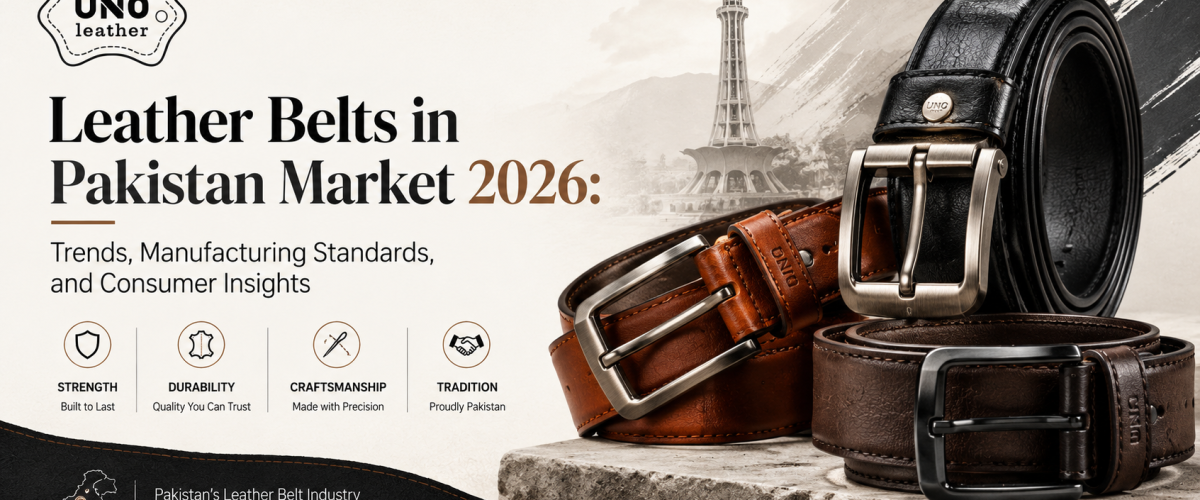
The leather belts industry in Pakistan has evolved from a basic utility accessory market into a growing fashion-driven segment influenced by global trends, rising disposable incomes, and expanding e-commerce channels. In 2026, leather belts are no longer just functional items used to hold trousers in place—they are now style statements, branding elements, and indicators of personal taste.
Pakistan’s strong leather manufacturing base, combined with its export-oriented tanning industry, gives the local belt market a competitive edge. However, it also faces challenges such as raw material price fluctuations, synthetic substitutes, and increasing global compliance requirements. This article explores the current market landscape, production standards, and consumer behavior shaping the leather belts industry in Pakistan in 2026.
The leather goods sector remains one of Pakistan’s most important value-added industries, with belts, wallets, shoes, and jackets forming a significant share of domestic and export-oriented production.
Recent industry insights indicate that Pakistan’s leather belts market is experiencing steady growth driven by fashion awareness, urbanization, and rising middle-class spending power. Market projections show a healthy compound annual growth rate (CAGR) in the range of mid-single digits through the decade, supported by increasing retail penetration and online shopping platforms .
Unlike previous years where belts were treated as purely formal wear accessories, 2026 shows a clear shift toward diversified usage across formal, casual, and luxury styling segments.
One of the biggest factors shaping the leather belts market is the growing fashion awareness among young consumers. Urban consumers in cities like Lahore, Karachi, Islamabad, and Faisalabad are increasingly influenced by global fashion trends through Instagram, TikTok, and international brands.
Belts are now matched with outfits deliberately—formal belts for office wear, textured belts for casual denim looks, and premium stitched belts for luxury styling.
Pakistan’s growing middle class has played a critical role in increasing demand for affordable yet durable fashion accessories. Consumers are more willing to spend on quality leather belts that offer longevity and aesthetic value rather than cheap synthetic alternatives.
This shift has also encouraged local manufacturers to improve finishing, stitching quality, and packaging.
Online platforms have significantly changed the leather goods supply chain. Customers now have access to a wide variety of belt styles, materials, and price ranges without visiting physical stores.
E-commerce has also allowed small-scale manufacturers from Sialkot, Kasur, and Karachi to reach nationwide audiences and even export customers directly.
Pakistan benefits from one of the largest livestock populations in the region, ensuring consistent raw material availability. The country’s leather industry produces a wide range of finished leather used in belts, bags, shoes, and garments.
Major industrial hubs like Sialkot, Kasur, and Karachi contribute significantly to tanning and finishing operations, forming the backbone of belt production supply chains.
The quality of leather belts in Pakistan varies widely depending on the manufacturer’s scale, export orientation, and access to modern processing facilities.
Manufacturers in Pakistan commonly use:
Full-grain and top-grain leather belts are typically used for export markets or premium domestic brands, while genuine leather dominates local retail stores.
Pakistan’s belt manufacturing is concentrated in key industrial regions:
These clusters ensure a complete supply chain from raw hides to finished fashion accessories.
In 2026, leading manufacturers are increasingly adopting improved finishing standards such as:
However, smaller workshops still face challenges in maintaining consistent quality due to limited access to modern machinery and skilled labor.
Global buyers are now demanding compliance with environmental and ethical production standards. Certifications and sustainable tanning processes are becoming more important, especially for exports to Europe and North America.
Pakistan’s leather industry is gradually adapting, but full compliance remains a work in progress due to infrastructure and cost limitations.
Modern consumers prefer simple, elegant belt designs rather than heavily decorated styles. Minimalist black and brown leather belts with clean buckles dominate sales in urban markets.
Consumers are becoming more aware of leather quality differences. Instead of choosing the cheapest option, many buyers now prioritize durability and stitching strength.
This has increased demand for top-grain and full-grain leather belts.
Fashion influencers and online styling content have a strong impact on purchase decisions. Belt styling is now part of outfit culture, especially among young professionals and students.
Personalized leather belts with engraved initials, custom buckles, and tailored sizing are gaining popularity, particularly in urban premium markets.
Despite strong growth potential, several challenges continue to affect the market:
Leather prices are unstable due to livestock supply variations and global chemical cost changes. This directly impacts belt pricing.
PU and synthetic belts are widely available at lower prices, especially in mass retail markets, creating price pressure on genuine leather producers.
One of the biggest industry issues is inconsistent quality labeling. Terms like “genuine leather” are often misunderstood by consumers, leading to confusion in product value perception.
While Pakistan has strong manufacturing capacity, many local brands lack global marketing presence, limiting export growth potential.
The future of Pakistan’s leather belts market looks promising, driven by:
If the industry continues improving quality control and global compliance, Pakistan can strengthen its position as a competitive supplier in the global leather accessories market.
The leather belts market in Pakistan in 2026 represents a blend of tradition and modern fashion evolution. With strong manufacturing hubs, skilled craftsmanship, and increasing consumer awareness, the industry is positioned for steady growth.
However, success in the coming years will depend on how effectively manufacturers address quality standardization, sustainability, and branding challenges. As consumers become more informed and fashion-conscious, only those brands that focus on durability, design, and trust will stand out in a competitive marketplace.
Yes. Pakistan has a strong leather manufacturing base with skilled labor and established tanning clusters in Sialkot, Kasur, and Karachi.
Full-grain and top-grain leather are considered the best due to durability and premium finishing quality.
Many belts are made from genuine leather, but quality varies depending on manufacturer and price segment.
They are cheaper and widely available, making them attractive for budget-conscious consumers.
Yes, the market is growing due to fashion trends, e-commerce expansion, and rising middle-class demand.
Sialkot, Karachi, Kasur, and Lahore are the main hubs of leather goods production.

