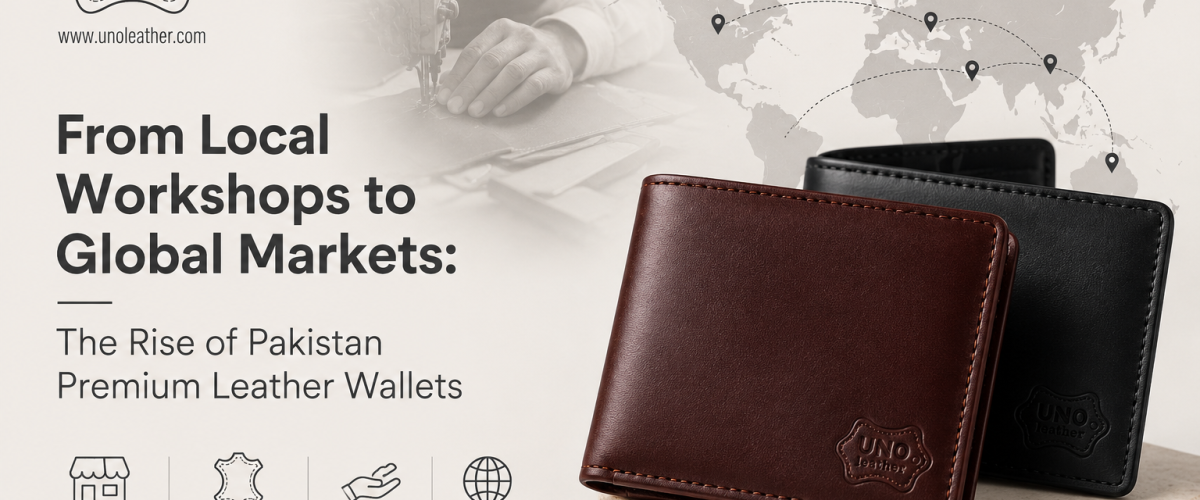
Pakistan’s leather industry has long been recognized as one of the strongest pillars of the country’s manufacturing and export economy. Among its most refined products, Pakistan premium leather wallets have gained significant attention in global markets for their craftsmanship, durability, and affordability. What once started as small-scale local workshops has now transformed into a competitive export-driven industry supplying high-end leather goods to Europe, the Middle East, North America, and beyond.
This transformation is not accidental. It is the result of decades of skill development, generational craftsmanship, improved tanning technologies, and increasing global demand for handmade and sustainable leather products. Today, Pakistan stands among the key players in the global leather goods market, especially in wallet manufacturing.
The journey of Pakistan’s leather wallet industry begins in traditional artisan workshops. Cities like Sialkot, Lahore, and Karachi have historically been hubs for leather processing and stitching. Initially, these workshops served local markets, producing simple wallets for everyday use.
Craftsmanship was passed down through families. Skilled artisans relied on hand-cutting techniques, manual stitching, and traditional leather treatment methods. While production was limited, the quality of workmanship was high, setting the foundation for future growth.
Even today, many premium wallet manufacturers in Pakistan still rely on this handcrafted heritage, combining old techniques with modern machinery to maintain authenticity and quality.
The global rise of Pakistan premium leather wallets can be attributed to several key factors:
Pakistan is one of the largest exporters of cow, buffalo, and goat leather. The raw hides are known for their strength, texture, and adaptability, making them ideal for luxury wallets.
Generations of artisans have refined their skills in cutting, stitching, embossing, and finishing leather products. This human expertise is difficult to replicate through automation alone.
Compared to European or American manufacturers, Pakistan offers significantly lower production costs while maintaining competitive quality standards. This balance has made Pakistani wallets attractive for international buyers.
Modern tanneries in Pakistan now use eco-friendly and advanced chemical treatments, improving leather durability, color consistency, and finish quality.
Over the last two decades, Pakistan’s leather wallet industry has undergone a major transformation. Earlier focused on domestic consumption, manufacturers now prioritize exports.
International demand grew as global consumers began to value:
As a result, Pakistani exporters expanded their operations to meet bulk orders for private-label brands, fashion retailers, and e-commerce platforms.
Today, Pakistan exports leather goods worth hundreds of millions of dollars annually, with wallets being one of the most in-demand categories.
One of the major reasons behind the global success of Pakistan premium leather wallets is design innovation. Modern manufacturers are no longer limited to basic bi-fold or tri-fold wallets. Instead, they now produce a wide variety of styles such as:
International fashion trends have also influenced Pakistani manufacturers. Many brands now collaborate with designers to create premium collections that align with global aesthetics.
The focus is no longer just durability—it is also about style, functionality, and brand identity.
Digital transformation has played a huge role in the rise of Pakistan’s leather wallet industry. Platforms like Amazon, Etsy, Shopify stores, and B2B marketplaces have allowed small and medium manufacturers to reach global customers directly.
Key benefits of e-commerce for Pakistani exporters include:
Social media marketing has further boosted visibility. Instagram and TikTok influencers often showcase leather wallets as premium lifestyle accessories, increasing demand among younger audiences.
To compete in international markets, Pakistani manufacturers have adopted strict quality control systems. Many factories now follow:
These improvements have significantly enhanced trust among global buyers. Today, “Made in Pakistan” leather goods are increasingly associated with reliability and craftsmanship rather than low-cost production alone.
Sustainability has become a key focus in the global leather industry. Pakistani manufacturers are gradually adopting eco-friendly practices such as:
This shift is crucial because modern consumers are more conscious of environmental impact. Sustainable production not only improves brand reputation but also opens doors to premium international markets.
Despite its growth, the leather wallet industry in Pakistan faces several challenges:
Prices of raw hides can vary significantly, affecting production costs.
Many manufacturers operate as OEM suppliers and lack strong global branding presence.
Some small workshops still rely on outdated machinery, affecting scalability.
Countries like India, China, and Italy present strong competition in leather exports.
Addressing these challenges is essential for long-term sustainability and global dominance.
The future of Pakistan’s leather wallet industry looks promising. With increasing global demand for handmade and authentic leather goods, Pakistani manufacturers are well-positioned to expand further.
Key future trends include:
If the industry continues to invest in branding, innovation, and compliance, Pakistan could become one of the top global hubs for premium leather accessories.
The journey of Pakistan premium leather wallets from small local workshops to global fashion markets is a powerful example of how craftsmanship, adaptability, and innovation can transform an industry. What was once a traditional cottage industry has now evolved into a globally recognized export sector.
With strong foundations in artisan skills and growing adoption of modern technologies, Pakistan’s leather wallet industry is not just surviving—it is thriving. The next decade holds even greater potential as global consumers increasingly seek authentic, durable, and ethically made leather products.
They are popular due to high-quality leather, skilled craftsmanship, affordable pricing, and unique handmade designs.
Yes, Pakistan produces high-grade cow, buffalo, and goat leather known for durability and texture quality.
Sialkot, Karachi, and Lahore are major hubs for leather manufacturing and exports.
Yes, they are widely exported to Europe, the Middle East, North America, and other regions.
The combination of traditional craftsmanship and modern production techniques gives them a unique balance of quality and affordability.

