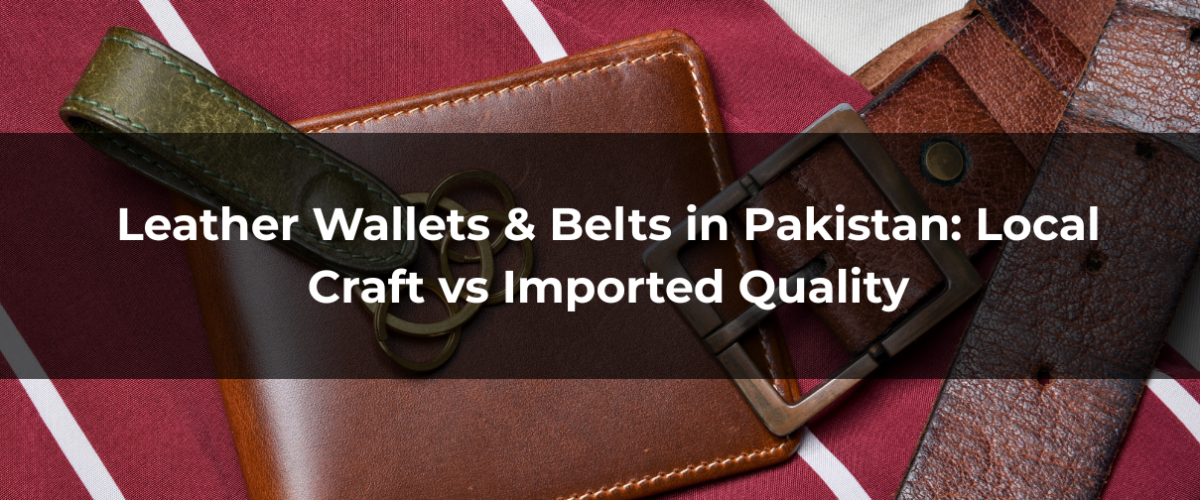
Leather wallets and belts are more than just accessories in Pakistan. They represent style, durability, and everyday practicality for men and women alike.
With the rise of both local leather brands and imported luxury products, buyers often face one key question: should you choose Pakistani craftsmanship or imported quality?
This guide explores both sides to help you make a smarter buying decision.
Pakistan has long been recognized as a global hub for leather production. Cities like Sialkot, Karachi, and Lahore are known for producing high-quality leather goods.
Local artisans often inherit skills passed down through generations. This results in products that reflect both tradition and precision.
Pakistani leather is widely appreciated for its durability, natural texture, and affordability. Many international brands even source leather products from Pakistan due to its strong manufacturing base.
One of the biggest advantages of local products is value for money. You can find genuine leather wallets in Pakistan ranging from affordable to premium pricing.
Local brands often use materials like full-grain and top-grain leather. These are known for long-lasting performance and a natural aging process.
Another key strength is customization. Many Pakistani craftsmen offer handmade wallets and belts with detailed stitching and personalized finishes.
Supporting local products also strengthens the domestic economy and artisan community.
Imported wallets and belts are often associated with luxury and branding. High-end names like Gucci or other international brands attract buyers looking for prestige.
These products usually come with premium packaging, consistent finishing, and global design trends.
However, imported products are significantly more expensive. In Pakistan, luxury imported wallets can cost up to ₨50,000 or more depending on the brand.
A large portion of the price comes from branding, shipping, and import duties rather than just material quality.
When comparing quality, the answer is not as simple as “imported is better.”
Pakistani leather is globally recognized for its strength and processing quality. Local products often match international standards in material and durability.
The real difference lies in consistency and finishing. Imported brands usually maintain strict quality control, ensuring uniform products.
On the other hand, local quality can vary depending on the manufacturer. Premium Pakistani brands compete globally, while lower-end products may not meet expectations.
One of the biggest challenges in Pakistan is the presence of fake or low-grade leather products.
Many items labeled as “genuine leather” are actually made from bonded or synthetic materials. These products may look good initially but tend to peel or crack quickly.
Real leather has a natural smell, slight imperfections, and a soft texture. Synthetic leather often feels overly smooth and smells like plastic.
Understanding this difference is crucial when comparing local and imported products.
Local leather wallets and belts typically range between ₨1,000 to ₨6,000 depending on quality.
Imported products, especially luxury ones, can be 5 to 10 times more expensive.
The key question is whether you’re paying for quality or brand image.
In many cases, a well-crafted Pakistani leather product offers similar durability at a fraction of the price.
Local brands often design products specifically for Pakistani users. This includes features like larger currency compartments and practical card slots.
Imported wallets may not always suit local needs, especially when it comes to currency size or usage habits.
This gives local products a practical edge for everyday use.
Full-grain leather products, whether local or imported, can last for years if maintained properly.
High-quality Pakistani leather wallets are known to age beautifully, developing a unique patina over time.
However, lower-quality items—both local and imported—can wear out quickly.
The durability depends more on the leather grade than the country of origin.
If you value affordability, craftsmanship, and practicality, local Pakistani leather products are an excellent choice.
If you prioritize branding, luxury appeal, and consistent finishing, imported products may suit your preferences better.
The smartest approach is to focus on leather quality, stitching, and authenticity rather than just the label.
Pakistan’s leather industry has evolved significantly and now competes on a global level.
While imported brands dominate the luxury segment, local craftsmen offer unmatched value and heritage.
For most buyers, the ideal choice lies in selecting high-quality local leather products from trusted sellers rather than blindly opting for expensive imports.
Yes, Pakistani leather is globally recognized for its durability and craftsmanship, especially when made from full-grain or top-grain leather.
Imported wallets include additional costs such as branding, shipping, and import duties, which increase the final price.
Real leather has a natural smell, slight imperfections, and soft texture, while fake leather feels plastic-like and overly smooth.
High-quality local belts can match imported ones in durability, but quality depends on the manufacturer and leather grade.
Full-grain leather is the best option due to its strength, durability, and ability to age beautifully over time.

